“When living through challenging social and environmental times, photographic art can help us to discover joy as an act of resilience.”
Rivers run through us.
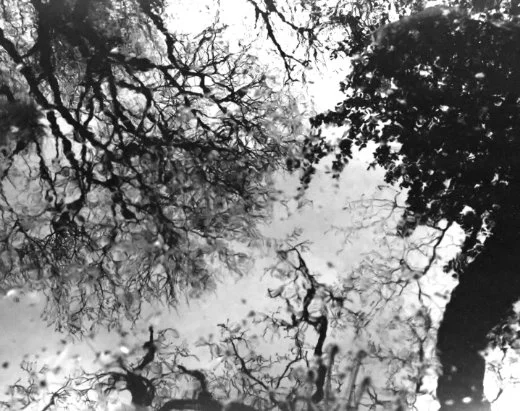
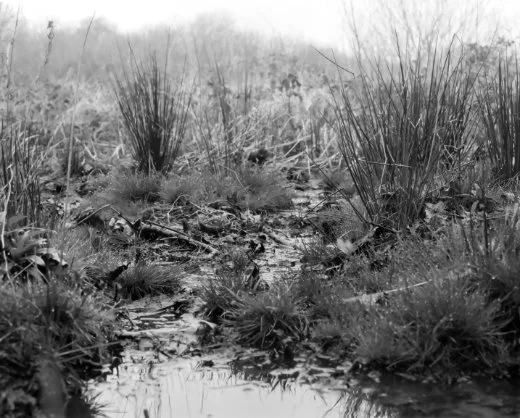
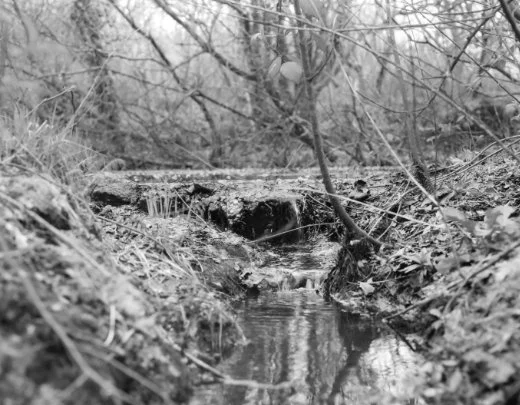
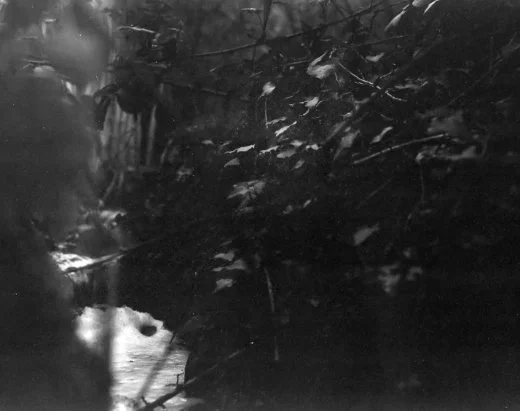
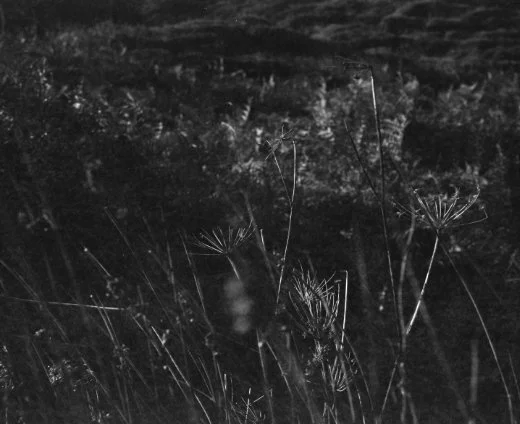
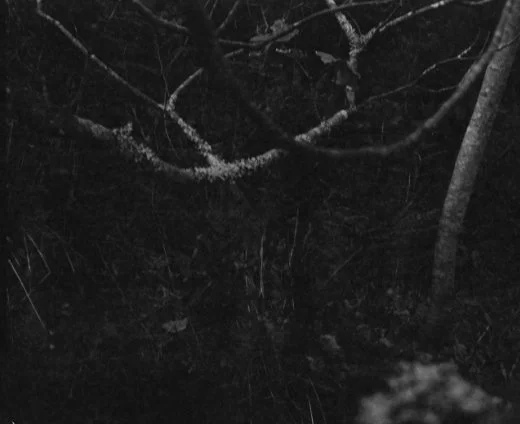
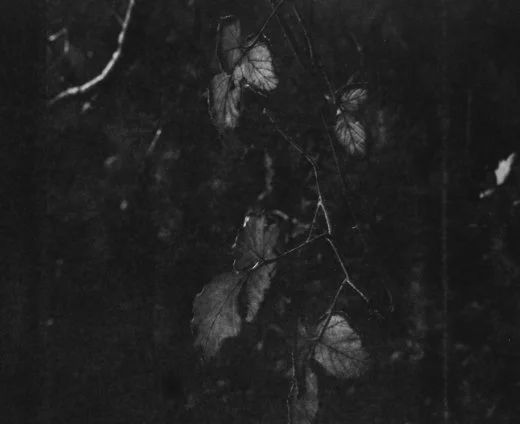
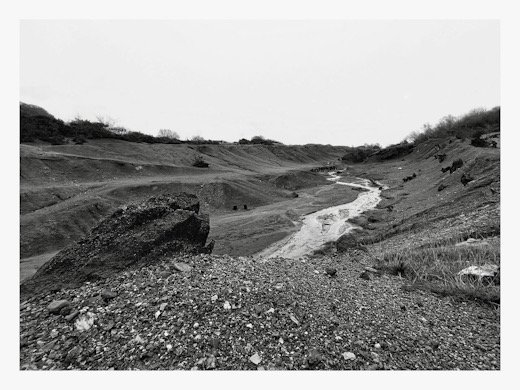
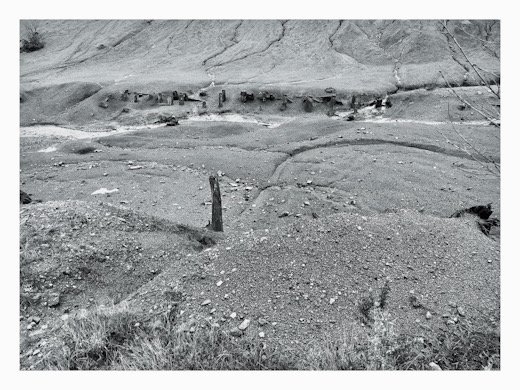
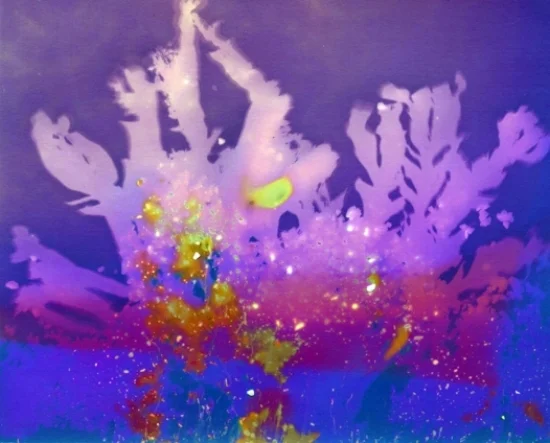
Rivercideotypes explores how site-specific eco-photography can mediate between humans and the riverscape.
This ongoing project is a photographic remediation through a plant perspective.
It exists to raise awareness of the challenges facing the riverscape and inspire action for healthy waterways. Simultaneously, it acknowledges photography as an extractive process and its impact on water resources.
This is not a scientific project but an embodied, creative entanglement with the riverine and its botany. I employ a slow-making and eco-conscious methodology for organically informed image-making.
The Rivercideotypes project considers historical, environmental and cultural aspects of Cornish streams and waterways.
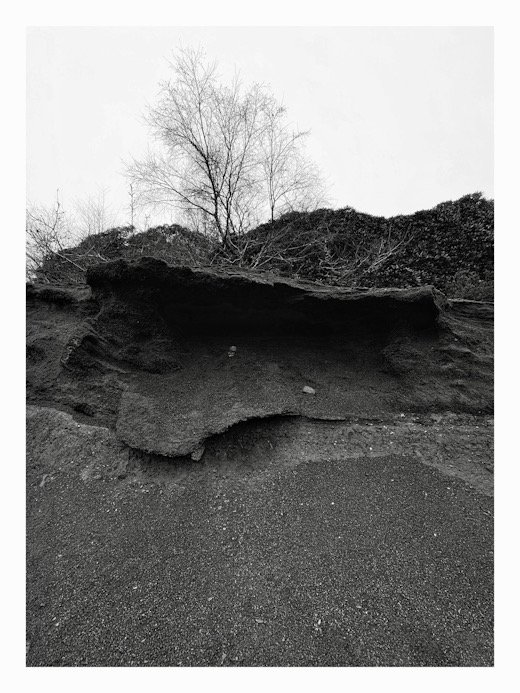
Harena Now investigates the global sand crisis through an alternative photographic process and digital manipulation.
It is part of my wider interest in how humans impact the world.
My motivation for this work is two-fold. First, it aims to raise the profile of this lesser-known environmental issue, which has dire consequences not only for ecosystems but for human life too. Secondly, it challenges responses to human-made environmental problems through abstract imagery and investigates whether this aesthetic can prompt action.
Some experts predict that due to the booming demand for sand in industries such as construction and beach re-nourishment, sand may run out. That seems impossible for such a ubiquitous material.
It also seems unimaginable that this has also led to a growth in sand mafias, and people have lost their homes, livelihoods, and even their lives.
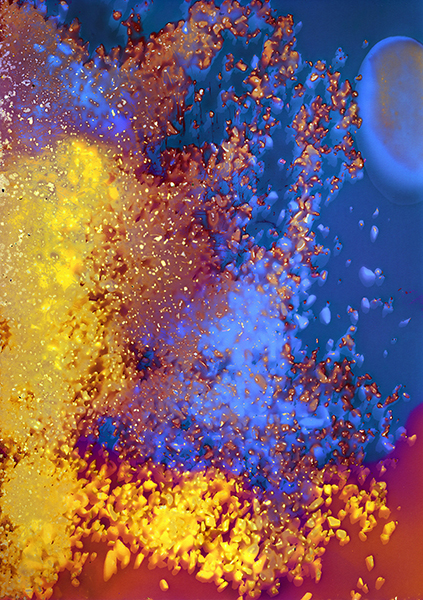
To minimise my photographic footprint, I have opted to use a camera-less process without chemical solutions, creating abstract images at coastal locations using sand, sunlight, and sometimes seawater.
Harena is the Latin word for sand. It also symbolises sandy places such as the seashore but also an arena/place of contest. As the developing environmental/humanitarian issues surrounding our use of sand is most definitely a battle, for those trying to survive and make a living, for the wildlife and habitats caught up in the process, for those trying to determine a solution, it is apt that Harena signifies the material (sand) and implies conflict.
The Harena Now images meld various sources of inspiration from the passage of time to geology, the microscopic to the vast, anthropocentric to ecocentric ideologies, and the past to the present.
“In every outthrust headland, in every curving beach, in every grain of sand there is the story of the earth”.
Rachel Carson.
Visit Kiran Pereira’s outstanding SandStories.org for insight about this global issue.
This work has been commissioned by the IMP@CT project and became part of the Of Earth-For Earth exhibition at Heartlands, Cornwall, 9-12 March 2020, as part of an international conference considering sustainable mining practices.
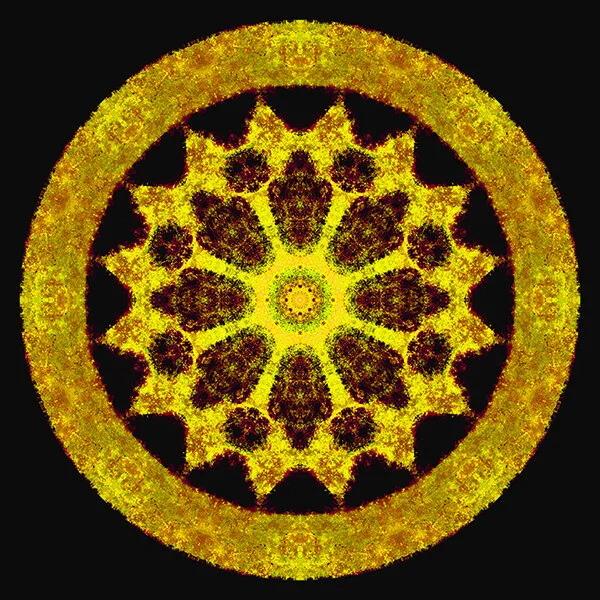
It is inspired by a waveform array sometimes seen in a geological sampling technique, Cathodoluminescence.
It draws on a sense of play and the seemingly collective love of kaleidoscopes to imbue a sense of wonder and beauty to encourage conversations about a challenging topic.
It is created using hybrid lumen/digital processes, combining negatives from cathodoluminescence images and/or sand and earth.
Find out more at oefe.co.uk
This series intertwines stories of mythical goddesses of nature with the story of plastic.
The innocence of a child’s plastic doll seems incongruous with the impact we are having on our planet through our over reliance on this material.
It seeks answers to why, with the knowledge we have, we can not lessen our usage on a global scale.
I originally wrote that this series had been inspired by my love of flowers and their cyclical nature.
That is true. But it is, in fact, more about ageing. In particular, the time when a woman is facing/going through/beyond the menopause.
This can be a challenging moment - just a moment, as it does not last forever or define a woman - but it can be scary and feel lonesome.
Even now, it seems openly admitting you are menopausal is still taboo (especially in work situations).
There is a propensity in our (UK) society to idolise youth rather than celebrate all ages. Women can feel pressured to be a certain way or look a certain way, whatever their age, but when your body begins to change during menopause, it can amplify insecurities.
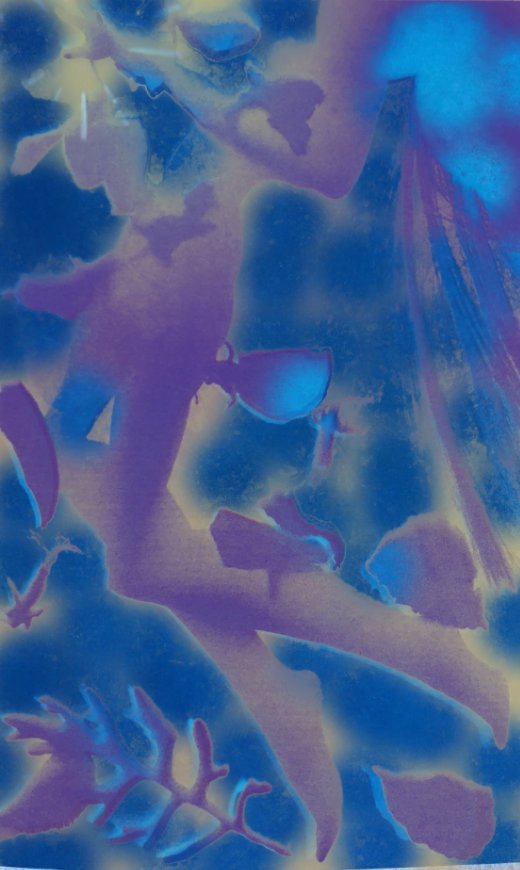
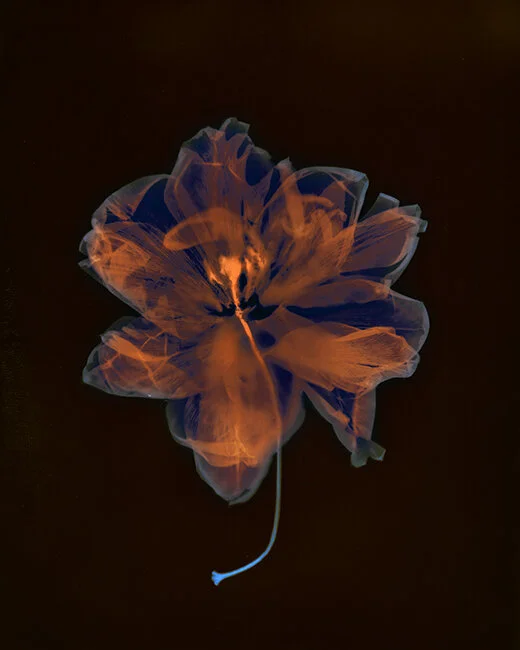
The images are created using dying flowers, capturing their lingering vitality and reinventing them.
If we are lucky, we all live to a ripe old age. This series celebrates life changes and encourages women not to lose themselves during this time. Some images have an X-ray effect to signify how fragile we can feel at this stage of our lives, how some women say they feel invisible or perhaps seen through, but the strong colours demand attention and signify that this passage of time is not the end, but rather a reinvention.
Seeing the flowers in this new way relates to seeing yourself in a new way - you are not invisible.
In January 2025, my mum passed away.
To help work through my grief, I turned to my passion for eco-conscious, camera-less image-making as a way to create a fitting tribute to my mum’s memory.
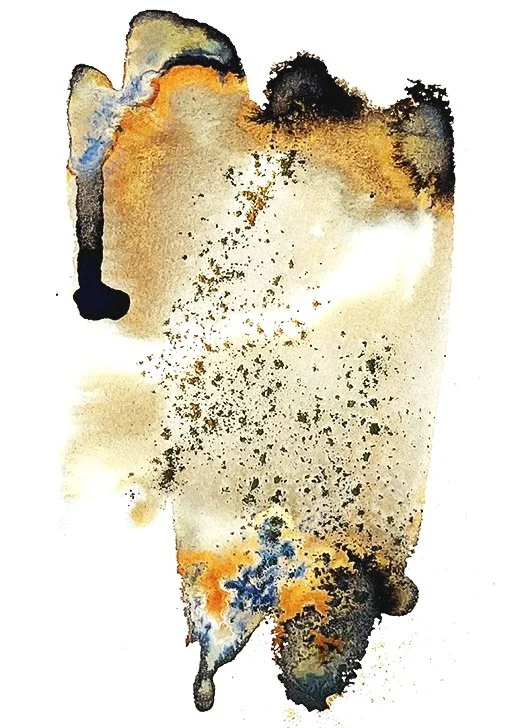
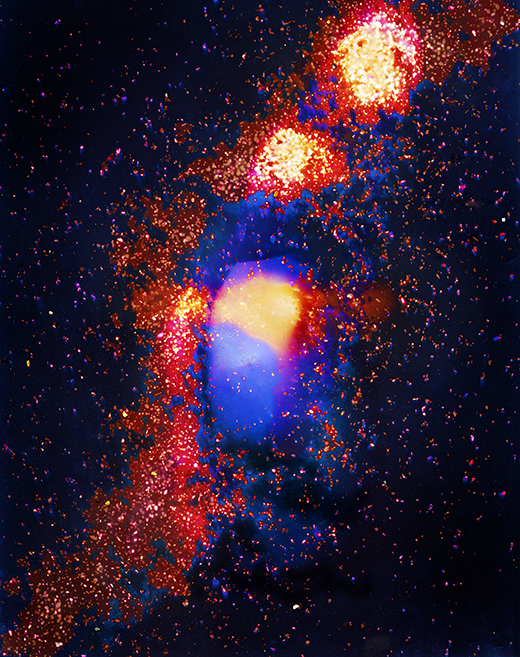
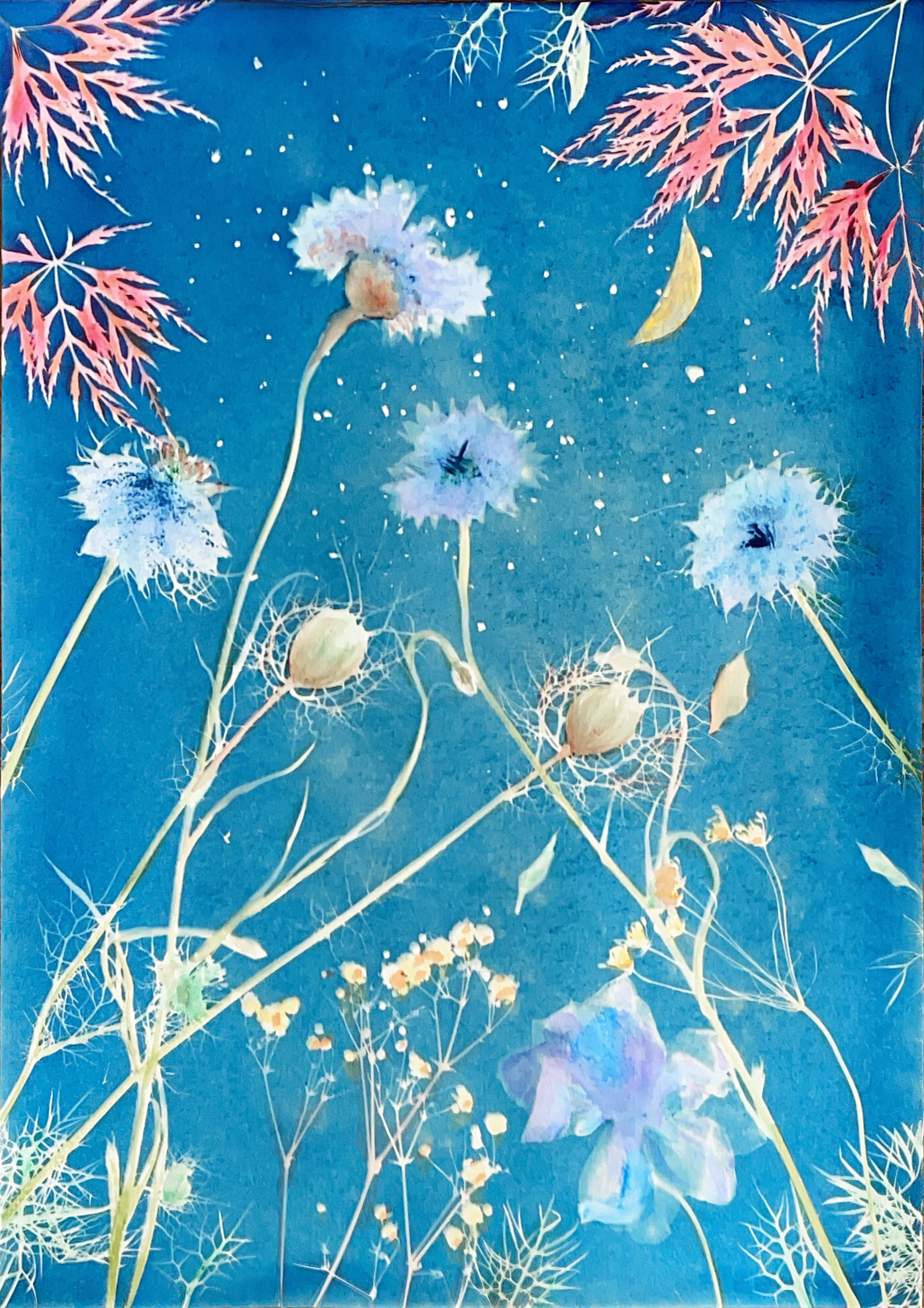
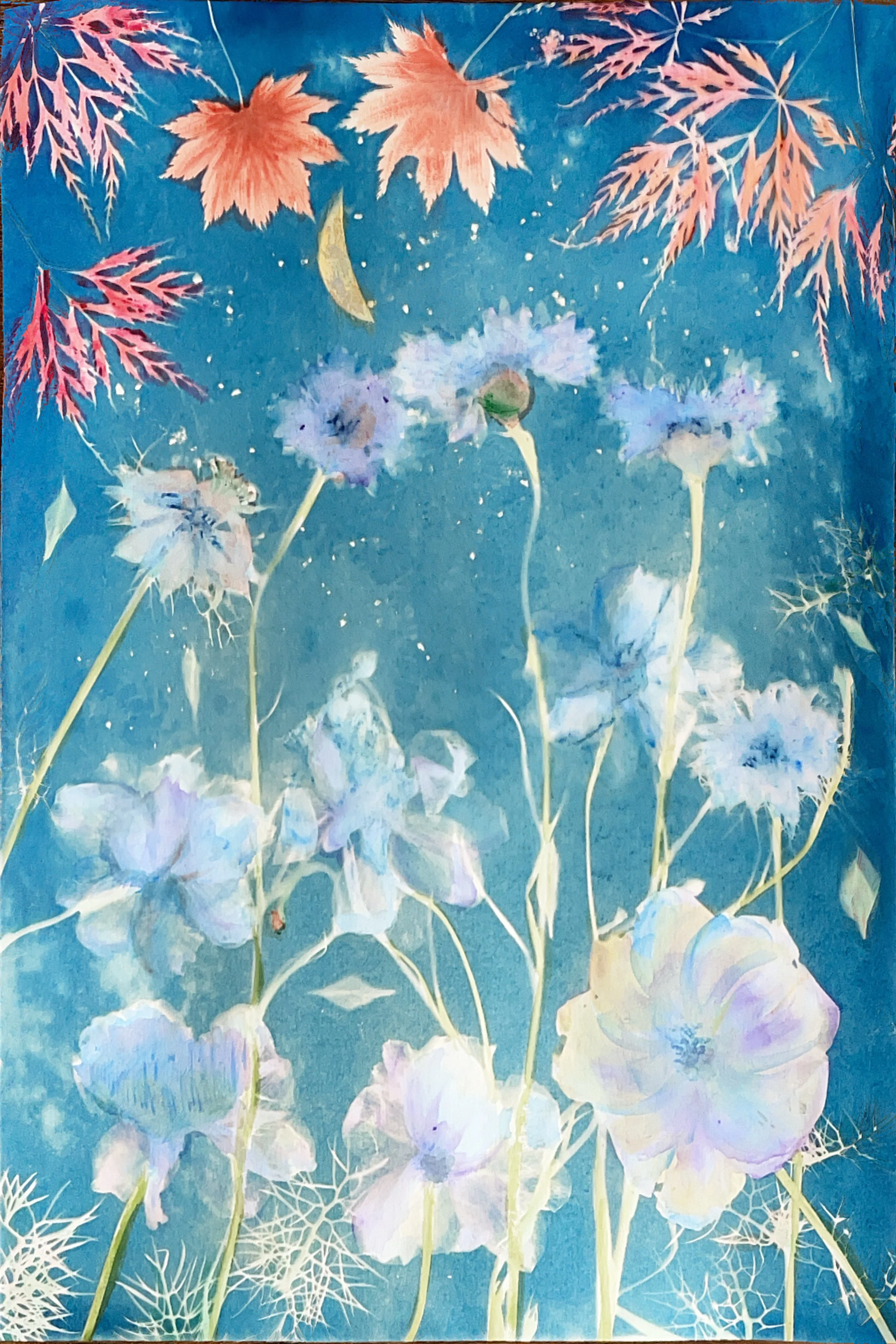
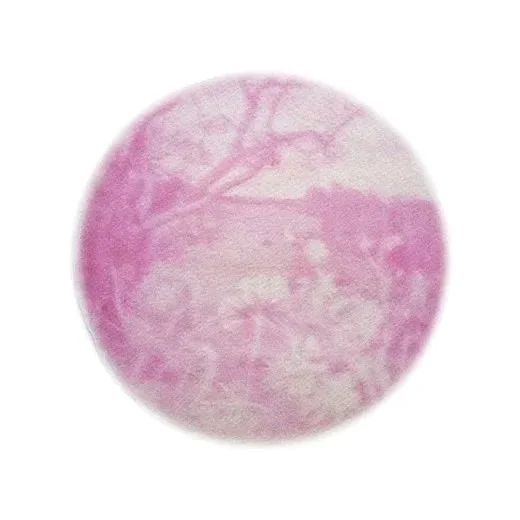
The cyanotype and watercolour images here are created by the respectful melding of some of my mum’s ashes and her funeral flowers.
I know my mum will always be with me in my thoughts, but this is my way of having her near me as a visual part of my life.
A few years ago, for her 90th birthday, we’d bought her a star with the name Rita, Pearl of the Night Sky. It reflected the meaning of her name - she was precious like a pearl and as sparkly as a star.
These unique prints bring me comfort now when I see them.
These images show a mix of residency, commissions, and personal creations.
I use techniques such as cyanotype, anthotype, chlorophyll, instant film lifts, black-and-white printing, iPhone, digital hybrids, and digital photography.
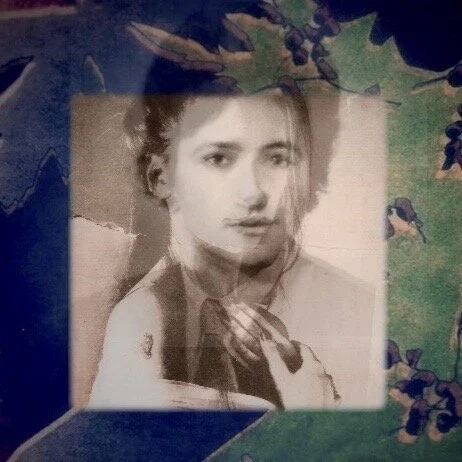
Josie links herself to her parents through this image. Neither is alive now, and this acts as a way to feel connected physically, despite a lack of physicality.
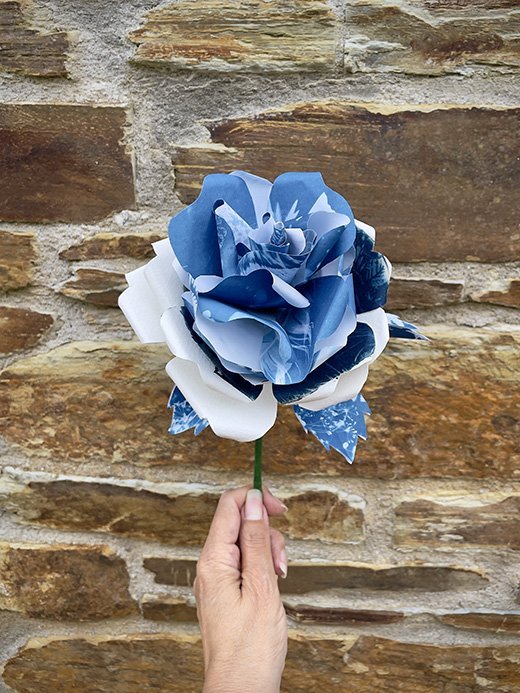
Josie’s paper cyanotype flowers have been created through the 985 BLUE series. This work is inspired by the historic craft of artificial and paper flower-making and Josie’s interest in repurposing cyanotype prints in new ways.
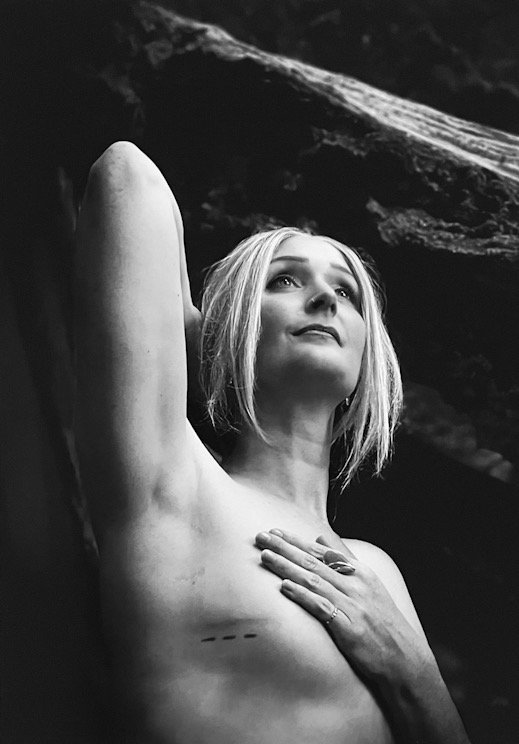
This is Josie’s friend, Carly.
In 2021, Carly learnt she had triple-negative breast cancer.
She has inspired everyone around her through her subsequent treatment (surgery, radiotherapy, chemotherapy, lymph node removal).
As being immersed in nature has given her solace, respite and hope during this time, she wanted a portrait to reflect this and to celebrate life.
This lumen print from beetroot grown by Josie at her allotment features in Food Stories from Shutter Hub Publications.
This original cyanotype now resides with one of Josie’s much-loved friends in Italy.
In 2017, Josie collaborated with Dr. Grace Twiston-Davies from the ESI on the '6000 Flowers: Farms for AONBees Pollinators’ project. Together, they explored the importance of bees to human existence and the need for agriculture to support them via informed land management practices in Cornwall.
In 2016, Josie was commissioned by Cornwall Crafts Association, in conjunction with the National Trust, to produce a moving image showcase of the work of some of the artists taking part in an exhibition to mark the centenary of the war waged across Europe, Asia and Africa from 1914 to 1918.
Address: St Agnes, Cornwall. TR5 0AF.
As an eco-conscious photographic artist, I take purposeful steps to consider the impact of my practice on the environment. On the whole, this relates to what photographc processes I use and how I can do this more sustainably. However, photography (trad/alt/digital) is an extractive medium and it will not be possible to eliminate techniques and products that rely on natural materials for their manufacture.